Tonka: The Note That Makes Things Feel Expensive
~6–8 min read
At a glance: Tonka isn’t “just vanilla.” It’s a warm, smooth note that can feel like vanilla + almond + gentle spice + soft woods, with a velvety, finished quality. In candles, tonka often adds the quiet luxury effect: depth without heaviness, sweetness without syrup, and a lingering “kept” warmth.
What does tonka smell like? Tonka often smells like a smooth blend of warm vanilla, soft almond, gentle spice, and a hint of sweet hay/wood warmth. It’s commonly used to add depth, softness, and an “expensive” finish to fragrances without making them overly sweet.
First: what is tonka?
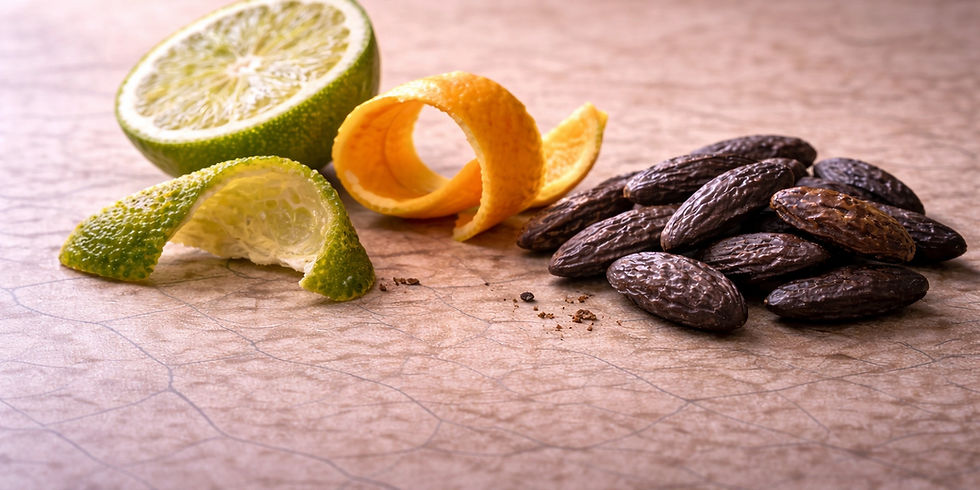
Tonka usually refers to the tonka bean—a fragrant seed used in perfumery (and “tonka” accords inspired by it) to add warmth, softness, and polish.
In fragrance language, tonka is typically used as a base note, meaning it shows up more as a scent warms and settles rather than as a sharp first impression.
If you’ve ever smelled a scent and thought:
“This feels smooth. Finished. Like it belongs in a nice space.”
Tonka may have been part of that effect.
What tonka smells like (in plain words)
Tonka is one of those notes that’s hard to pin down because it’s not one-dimensional.
Most people experience tonka as:
warm vanilla softness (but less “frosting”)
almond-like smoothness
gentle spice warmth (think soft clove/cinnamon nuance, not “holiday”)
a subtle dry sweetness—like warm air, not sugar
It can also read as:
slightly woody
slightly powdery (in a luxurious way, when balanced)
softly resinous
The vibe: cozy, refined, and expensive.
Tonka vs vanilla (why tonka feels more “luxury”)
Vanilla can be beautiful. It can also become:
sugary
dessert-like
loud
predictable
Tonka tends to feel:
smoother
darker
more nuanced
less syrupy
more “perfume-like” than “bakery-like”
A useful way to think of it
Vanilla = sweetness
Tonka = sweetness + depth + polish
That’s why tonka is often used to make warm scents feel grown-up.
Why tonka makes things feel expensive (the real reasons)
1) It rounds sharp edges
If a scent has bright citrus, spice, or aromatics, tonka can soften the corners so the fragrance feels cohesive rather than spiky.
2) It adds “finish”
Expensive things often feel finished—like nothing is sticking out awkwardly.
Tonka helps a fragrance settle into itself:
smoother drydown
more blended warmth
longer-lasting cozy impression
3) It creates warmth without heaviness
Amber can be rich. Vanilla can be sweet. Woods can be dry. Tonka can connect those worlds and keep the result balanced.
4) It reads “perfumey” instead of “fragrant”
This is subtle but real.
Tonka often pushes a candle from:
“this smells nice” to
“this smells designed.”
That “designed” quality is the luxury signal.
What tonka does in a candle (specifically)
Candles don’t behave exactly like perfume on skin, but tonka still shows up in recognizable ways—especially as wax warms.
Tonka in candles often:
makes the scent feel warmer after 30–90 minutes
increases the “linger” in the room after extinguishing
smooths a blend so it feels less sharp and more atmospheric
supports the unfold effect (bright opening → cozy finish)

Tonka pairings that always work (quiet luxury combos)
If you’re building or choosing a tonka-forward scent, these pairings are the classics:
Tonka + citrus lift (bergamot/orange nuance)
Vibe: clean opening, warm finish
Feels like: modern, expensive, easy-to-love
Tonka + woods (cedar/sandalwood)
Vibe: grounded warmth
Feels like: cozy minimalism, evening calm
Tonka + tea (black tea / chai warmth)
Vibe: refined cozy
Feels like: warm cup + clean air, not sugary
Tonka + amber (used carefully)
Vibe: golden glow
Feels like: inviting, plush, romantic
Tonka + spice (cardamom, soft chai)
Vibe: comfort with structure
Feels like: cozy, but elevated
If you want warmth without “dessert,” tonka + woods + citrus is a top-tier lane.
When tonka can go wrong (and how to avoid it)
Tonka is gorgeous, but it can feel off if the blend is unbalanced.
It can feel too sweet if:
paired with heavy caramel/bakery notes
the vanilla is already very dominant
the scent lacks lift (no citrus/tea/freshness)
It can feel too powdery if:
combined with certain musks and florals without enough grounding
It can feel “generic warm” if:
the heart is missing (no tea/spice/floral identity)
Structure fix: give tonka an opening (citrus/air), a heart (tea/spice/floral), and a clean base partner (woods/amber) so it feels dimensional.
How to know if you personally love tonka
You’ll probably love tonka if you like:
warm skin scents
refined gourmands (not candy)
cozy woody fragrances
amber scents that aren’t too heavy
“soft luxury” rather than “loud sweet”
You might not love tonka-forward scents if you prefer:
ultra-fresh ozone/aquatic profiles only
very green/herbal-only scents
no sweetness at all
The Pruneme angle (why we love tonka)
In quiet luxury home fragrance, tonka is a cheat code—when used with restraint.
It helps create:
warmth that feels kept
sweetness that doesn’t feel cheap
a drydown that feels designed
a scent you can live with for hours
FAQ
Is tonka the same as vanilla?
No. Tonka often contains vanilla-like warmth, but it’s more complex—often with almond-like smoothness and gentle spice/wood warmth.
Does tonka make a candle stronger?
Not necessarily louder. It often makes the candle feel richer and more lasting, especially as the scent settles.
Why does tonka feel “expensive”?
Smooths harsh edges, adds polish, and creates a refined warm finish without syrupy sweetness.
If citrus is the sparkle and woods are the backbone, tonka is the finishing touch—the part that makes the room feel softly expensive.
To display the Widget on your site, open Blogs Products Upsell Settings Panel, then open the Dashboard & add Products to your Blog Posts. Within the Editor you will only see a preview of the Widget, the associated Products for this Post will display on your Live Site.
Start your 14 days Free Trial to activate products for more than one post.
icon above or open Settings panel.
Please click on the


Comments