How to Read a Candle Flame
Updated: 2 days ago
A candle flame gives you useful feedback. It does not give you a complete diagnosis.
You can observe whether the flame is mostly steady, whether moving air is pushing it, whether visible smoke persists, whether the flame has become unusually large, whether debris is burning in the melt pool, and whether the wick has developed heavy carbon buildup.
Those observations can tell you when to leave the candle alone, correct the environment, or extinguish it.
They cannot tell you everything about invisible emissions, wax chemistry, vessel temperature, toxicology, or whether the entire candle is safe.
Think of the flame as a warning-and-troubleshooting signal. Not a safety certificate.
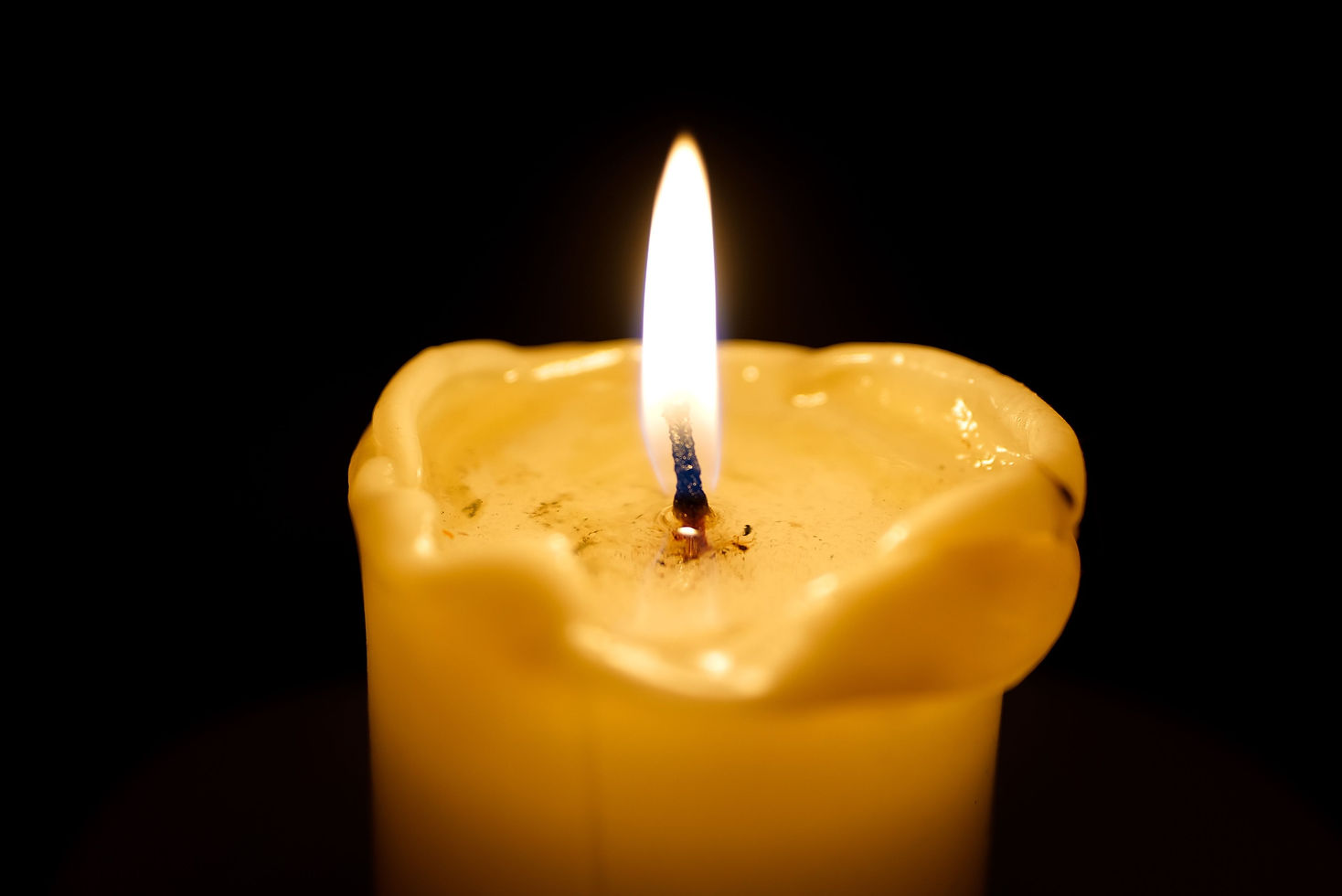
A calm, steady flame
National Candle Association guidance describes a calm, steady flame as a sign that the candle’s burning process is in balance.
In practical terms, that means the flame is mostly upright, movement is gentle rather than constant, there is no persistent visible smoking, and the candle is behaving as expected for that product.
That does not mean a steady flame proves the candle is safe in every respect. A visual check cannot confirm glass integrity, internal vessel temperature, invisible particle emissions, chemical exposure, or compliance with every applicable standard.
It simply tells you that the visible combustion looks more stable than a repeatedly disturbed flame.
A flame that constantly leans or flickers
Persistent flickering often means the flame is being disturbed by moving air.
HVAC vents
fans
open windows
doors
strong air purifiers
busy walkways
nearby candles creating their own air movement.
National Candle Association guidance links disturbed flame shape with visible soot and recommends keeping candles away from drafts, vents, and strong air currents.
Do not pick up and move a burning candle. If the location is the problem, extinguish the candle safely, let it cool, then relocate it according to the manufacturer’s instructions.
Why stressed burning matters
A 2021 study deliberately created stressed burning in five types of pillar candles by using controlled fluctuating air velocities in a chamber.
Under those conditions, the particle mass emissions were dominated by soot, and emission profiles varied by wax and wick system.
That supports a practical conclusion: unstable flame conditions can materially change combustion emissions.
It does not justify using one flicker as a quantitative pollution measurement, and its numerical results should not be generalized to every container candle.
Visible wisps of smoke
Persistent visible smoke is a reason to inspect the burn.
Possible contributors include a wick that has become too long, a disturbed flame, debris in the melt pool, or an oversized/unstable flame.
If visible smoking continues: extinguish the candle, allow it to cool completely, inspect the wick and melt pool, then follow the candle’s own care instructions before relighting.
Do not keep burning simply to see whether the smoke eventually disappears.
An unusually tall or leaping flame
A flare-up or unusually large flame deserves a conservative response.
National Candle Association guidance identifies an overly long wick as one possible cause of flare-ups and recommends extinguishing a flame that becomes too high or repeatedly unstable.
The safest response is: extinguish, cool, inspect, and prepare the wick according to the manufacturer’s instructions.
If the same candle repeatedly develops an unusually large or unstable flame despite correct use, discontinue use and contact the maker rather than normalizing the behavior.
Do not diagnose the exact cause from flame height alone.
A mushroom-shaped carbon cap
Some wicks develop carbon buildup at the tip. A small amount can occur during normal burning.
Heavy buildup can accompany a larger or less stable flame and can eventually drop debris into the melt pool.
If the carbon cap becomes excessive: extinguish the candle, let it cool, then trim or prepare the wick according to the product instructions.
Do not reach into hot wax while the candle is burning.
What the flame cannot tell you by itself
A visual flame check has limits.
A small flame does not automatically prove the candle is under-wicked.
A large flame does not identify the wax.
Visible soot does not tell you the total amount or composition of invisible emissions.
A calm flame does not prove that every safety variable is acceptable.
A flicker does not prove the candle is defective if a vent is blowing directly across it.
The correct interpretation depends on candle design, wick condition, room airflow, burn duration, vessel condition, and whether the pattern repeats under correct use.
That is why flame reading should guide the next action—not replace testing or product instructions.
Look at the melt pool, but do not turn it into a pass/fail test
The melt pool adds useful context. A candle that repeatedly burns straight down the center can be tunneling.
But repeated tunneling is not automatically the customer’s fault. CandleScience’s maker guidance treats tunneling as a wick/system issue as well.
Do not chase an edge-to-edge melt pool at any cost. A very deep pool, oversized flame, excessive heat, or unstable burn is not improved merely because the wax reaches the glass quickly.
Follow the manufacturer’s maximum burn time. Judge repeated behavior.
Know when to extinguish
Extinguish the candle if:
the flame becomes unusually large or uncontrollable
visible smoking persists
the flame repeatedly flares or behaves abnormally
debris ignites in the melt pool
the vessel is cracked or otherwise appears damaged
the candle is no longer in a safe location
you can no longer supervise it.
If you smell gas, fuel, solvent, or another unknown environmental hazard, do not use an open flame as a diagnostic tool. Address the environmental hazard first.
When in doubt, stopping the burn is the conservative choice.
A 30-second visual check
After the candle has settled into its normal burn, look from a normal distance.
Is the flame mostly calm?
Is moving air pushing it?
Is there persistent visible smoke?
Is the flame unusually large for this candle?
Is debris burning in the pool?
Has the behavior changed from previous burns?
If something looks wrong: do not improvise around an open flame. Extinguish. Cool. Inspect. Then follow the product instructions or contact the maker if the behavior keeps returning.
The flame is evidence—not proof
Learning to watch a candle is useful. A stable-looking flame is reassuring information.
Persistent smoke, repeated flicker, flare-ups, or abnormal behavior are reasons to respond.
But flame appearance is only one part of candle safety and performance.
The best visual habit is not trying to diagnose everything. It is noticing when the candle stops behaving normally—and knowing when to stop the burn.


Comments